2024 International & US HS Code & Harmonized Tariff Code Lookup
Use this HS and harmonized tariff code list lookup tool to find the six-digit Harmonized Codes for international shipping and accurately classify your goods for global trade.
This Harmonized System calculator provides duty estimates where applicable. Click here to find out more about duty estimates.
What is an HS or HTS Code?
HS Codes (or HTS Codes), also known as the Harmonized Commodity Description and Coding System, or simply the Harmonized System, are a standardized international system to classify globally traded products. The system was first implemented in 1988 and is currently maintained by the World Customs Organization. The HS Convention, signed in 1983, has over 205 member countries. As signatories, each country agrees to classify its HS tariff code and duty structure according to the HS Code categories.
The Harmonized System is used to ease global trade by creating unified categories to classify different types of goods.
The Harmonized System categorizes about 5,000 commodity groups in simple six-digit codes, broken down into 21 Harmonized System sections, 96 Harmonized System chapters, and thousands of headings.
HS Codes Structure
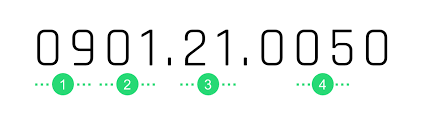
Global & US HS Codes have four components. Referring to the diagram’s green numbering:
1. Chapter
There are 21 distinct sections that split into 96 chapters. Exception chapters include chapter 77, which is reserved for future use, chapters 98 and 99, which are limited to national use, and Chapter 99, which is a specific code limited to temporary modifications. In the above example, the chapter selected is 09, for “Coffee, tea, maté and spices”.
2. Heading
The heading dictates the specific category within any particular chapter. In the example above, the 01 refers to coffee.
3. Sub-heading
The last two digits of the international Harmonized Code are more specific, defining subcategories of products. For example, caffeinated coffee beans are 0901.21, but decaf is 0901.22. Incidentally, instant coffee would fall under a totally different heading – 21 – for miscellaneous edible preparations.
4. Extra digits
Countries can use an additional 2-4 digits for country-specific categorizations. For example, the US HS code relies on ten digit codes called Schedule B numbers. The 0050 in the above example is used for non-organic coffee. Since these digits are unique, non-organic caffeinated coffee in another country would begin with the same 6 digits but the last four digits would likely be different.
USA HS and HTS Codes
In the USA, exports and imports each have their own numbering system:
USA Harmonized Tariff Schedule codes (HTS-US ) are used for import categorization. Use this number for import paperwork and electronic filing.
Schedule B codes are used for export categorization. Use this number for export paperwork and EEI filing.
As a signatory to the HS Convention, the USA uses the six-digit HS System categorization. However, for determining duty rates and statistical purposes, some countries break the classification down further by adding 1-4 numbers after the six digits. These numbers are called Harmonized Tariff Schedule (HTS ) codes.
Ready to get live freight quotes?
HS Code Search & Lookup
There are 21 Harmonized System Sections – the highest level of customs tariff code categorization. This HS code list is used to unify broad categories, like different types of vegetables (Section II, chapters 6-14). These sections are dictated by the WCO and are unified across every member country. The 21 HS Code sections include the following:
HS Code List
If you’re looking for a quick reference for HS Codes according to category of goods, check out our free HS Lookup chart.
HS and HTS Codes Purpose
HS and HTS Codes are used by customs and logistics providers for a variety of purposes, from calculating duties and tariffs to ensuring that an importer is not importing banned or hazardous products. The true value of HS Codes is how globally recognized they are. Whether you’re importing purebred horses to the United States or Sri Lanka, the first six digits of that HS Code will be 0101.21.
HS Codes for Export and Import
That’s exactly where Freightos’ Harmonized Code Duty Calculator comes in handy. Just head to the top of this page, start entering the product you’re shipping into the HS Code Finder, and the calculator will pull results from the customs HS tariff codes list. Since the Harmonized System Code uses very specific words, it may be easier to browse HS codes instead of searching.
Once you find the right HS code, enter the value of your shipment. The HS Code calculator will tell you exactly what the required US duties are. If you encounter a problem, just report the bug with the calculator tool and we’ll be sure to fix it as quickly as possible.
How to get your HS Code
Our HS Code calculator will help you get started finding your HS code. Typically though, once you have goods ready to ship, your supplier will provide you with an HS code – but always check to make sure. In addition, it’s a good idea to reach out to your freight forwarder or customs broker to make sure your HS code is accurate – or if your supplier does not provide one.
Note: some goods can potentially use a few different HS codes. Your freight forwarder or customs broker can also help you choose the one with the lowest possible customs rates for your goods.
Got Your HS Code?
Watch this webinar to hear our customs expert deep dive into everything you need to know.